
Ramaphosa Demands Full-Scale Probe After Murder of Key Madlanga Commission Witness
President Cyril Ramaphosa has strongly condemned the assassination of whistle-blower Marius “Vlam” van der Merwe, widely known as Witness D, calling the killing a direct attack on the fight against corruption within South Africa’s law-enforcement structures. Speaking at COSATU’s 40th anniversary celebrations in Dobsonville, Soweto, the president described the murder as “heinous” and vowed that investigators must pursue every lead until those responsible are brought to justice.
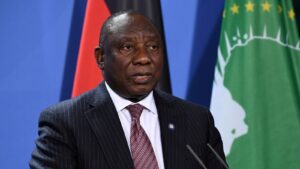
Ramaphosa emphasised that the killing represents far more than an isolated act of violence. In his view, it strikes at the heart of efforts to uncover long-standing corruption within the security cluster. “The killing of Witness D is terribly, terribly unacceptable,” he said. “We are devastated by his death, and the investigation must be thorough. No stone must be left unturned until the perpetrators of this crime are found.” He further warned that attacks on whistle-blowers create fear among potential witnesses, threatening the integrity of current and future corruption investigations.
The president stressed that the tragedy highlights an urgent need to strengthen witness protection. He insisted that the safety of individuals who assist in exposing wrongdoing must be prioritised and that government should upgrade its protection systems to ensure that no other witness suffers a similar fate. “We must elevate witness protection to a higher level,” Ramaphosa said. “We cannot allow this level of lawlessness, especially in the security cluster, to continue.”
Security system installation
Van der Merwe, 41, was gunned down outside his Brakpan home on Friday evening, in full view of his wife and children. Police confirmed that the attackers used an AK-47 rifle and fled in a white Nissan NP200 bakkie with a canopy. Authorities have launched an intensive manhunt.
Although Van der Merwe had recently testified before the Madlanga Commission, he was not under official protection. Justice Minister Mmamoloko Kubayi revealed that the commission had offered him entry into the witness-protection programme, but he declined, believing that his own private security company could safeguard him. Kubayi expressed deep concern that his identity became public, warning that the breakdown in anonymity placed him at greater risk. She stressed that transparency must never supersede the right to life.
In his testimony last month, given partly behind closed doors, Van der Merwe implicated high-ranking officials within the Ekurhuleni Metropolitan Police Department (EMPD). He alleged that suspended acting EMPD chief Brigadier Julius Mkhwanazi ordered him to dispose of the body of a suspect killed by officers. He also detailed how the suspect had been suffocated inside a bedroom, allegedly in the presence of EMPD members, SAPS officers, and a police informant.
Government has signalled that Van der Merwe’s assassination will force a reassessment of how witnesses are handled, protected, and allowed to give evidence. Kubayi called for a national review of procedures to ensure future witnesses remain safe. Ramaphosa reaffirmed his commitment to fully implementing the findings of the Madlanga Commission, saying the truth revealed through the inquiry will help dismantle systemic corruption that has plagued policing structures for years.
Both the commission and the presidency have extended condolences to Van der Merwe’s family, honouring his courage and promising renewed efforts to protect those who step forward to speak out against wrongdoing.